
In this issue, you can read about:
- When Indians fell in love with platforms (and what went wrong)
- How much work-related costs for gig workers in Brazil have risen since last year
- Heatwaves, deactivations, and... elevator problems: issues recently raised by gig workers worldwide, from Argentina to Indonesia
Don't forget to take the gig quiz: you'll find the answer at the end of this newsletter, along with a story about gig companies and legislation in South Africa.
THE GIG QUIZ
How will the passage of the National Land Transport Bill into law affect the ride-hailing sector?
- It will be easier to get licences
- It will be harder to get licences
- No impact at all
When Indians Fell In Love With the Platform Economy (And What Went Wrong)
"While highly educated Indians with jobs in engineering or healthcare could earn a salary of 10,000 to 15,000 rupees, Uber promised monthly earnings of up to 80,000 rupees."
So the platform economy took root in India about ten years ago, with a recipe that included the promise of high earnings and the ability to organise your own shifts.
But then something went wrong.
As customers enjoyed huge discounts, workers' conditions began to deteriorate, with little or no regard for their welfare, unfair deactivations, and frequent episodes of violence and discrimination.
Varsha Bansal, an independent journalist who lived in the United States and then returned to India, where she is based now, offers a qualitative perspective on this story.
In both the countries, she witnessed the poor conditions of gig workers and decided to research and write about them.
In the latest episode of The Gig Work Podcast, Varsha Bansal sat down with platform expert Martijn Arets to discuss her research on gig workers including possible solutions to improve the working conditions of gig workers.
Find some highlights below, or read the full interview here (estimated reading time: 5 minutes)
Once upon a time
At first, working via an app seemed super attractive, especially for women and the young: "Highly educated young people moved from small towns and villages to the big city to earn money via apps like Uber and Ola," says Varsha Bansal. Ten years ago taxi apps like Uber and Ola quickly became popular.
The dream ends
"Around 2018, there were a lot of stories of Uber drivers committing suicide because they couldn't pay off their debts." Soon, workers began to feel the pressure of lower earnings, longer hours, and unfair deactivations.
Things are changing - but it takes time
Workers are meeting in unions, organising protests, and discussing with politicians on Telegram and Whatsapp, but improvements will take time. Platforms make workers work in isolation, says Bansal.
Moreover, “anyone who wants to find out what is happening in the platform economy has to conduct their own surveys.” Researchers, journalists, and even trade unions lack data.
Is platformisation good or bad?
"Neither. There is mainly a lack of regulation. And to manage innovation, we need regulation."
READ THE FULL INTERVIEW - OR LISTEN TO IT
The Cost Of Being A Gig Worker In Brazil: Surging Prices On Laptops, Car Insurance, And Bicycles
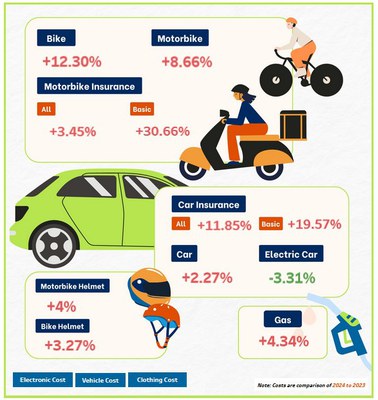
The prices of the essentials a Brazilian gig worker needs to buy to do their job have gone up since last year.
Clothing, electronics, and vehicles are now more expensive than in 2023. Price increases are particularly significant for laptops (+24.94%), basic car insurance (+19.57%), and bicycles (+12.30%).
These are the findings of WageIndicator's quarterly cost of living survey, conducted with the help of 300 collectors around the world.
WHAT ABOUT FUEL, CLOTHES AND INTERNET PLANS? EXPLORE VISUALS
The bigger picture: President Lula's Bill Between Hourly Rates and Costs
The gig economy in Brazil has been in turmoil since March, when President Lula sent a bill to Congress to introduce a package of measures in favour of four-wheel ride-hailing drivers, including an hourly remuneration “composed of 8.03 reais (which would exceed the current federal minimum hourly wage of 6.42 reais, ed.) as compensation for the services provided and 24.07 reais as compensation for the costs incurred by the worker in providing individual private paid transport of passengers". Costs include mobile phone use, fuel, vehicle maintenance, insurance, taxes, and depreciation, as covered by the WageIndicator cost of living survey.
If the National Congress approves the bill, the total hourly rate will be 32.10 reais, but only for drivers who work a minimum of 8 hours and a maximum of 12 hours per day.
But There Is a But: The Hybrid Status of Gig Workers
Concerns have been raised about sections of the bill that allow drivers to remain independent contractors, while platforms can enforce standards, use real-time monitoring, and apply ratings without creating employment relationships. This hybrid working model—autonomy with rights—is causing scepticism among experts.
One edition at a time, around the world! In our last newsletter, we looked at the work-related costs for gig workers in the Netherlands. Stay tuned—more countries to come!
Where Gig Workers Bring Up Issues Worldwide
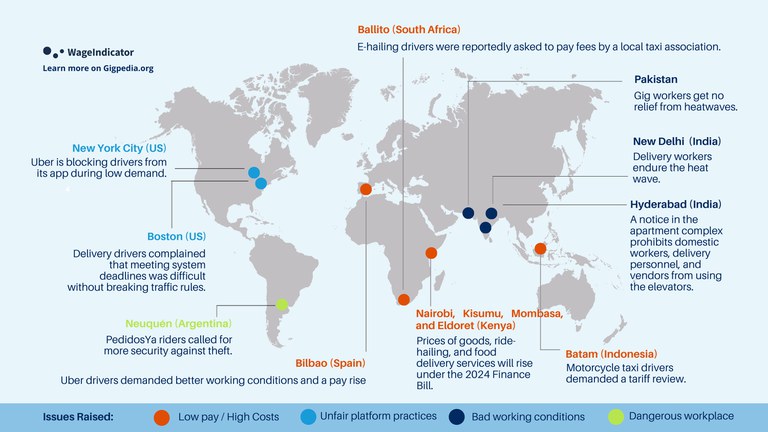
Sources: Ballito: Citizen.co.za; Batam: gowest.id; Bilbao: Elcorreo.com; Boston: Bostonglobe.com; Hyderabad: Thenewsminute.com; Kenya: Gadgets-Africa.com; Neuquén: Lmneuquen.com; New Delhi: RestofWorld; New York: Nypost.com
More News from Workers WorldWide
India - Blinkit's warehouse in Hyderabad was found to lack basic hygiene protocols.
No progress has been made on the Telangana Chief Minister's plan to develop a ride-hailing app with insurance and health coverage, but gig workers remain optimistic.
Nigeria - Bolt drivers in Lagos celebrated the new local branch of the Amalgamated Union of App-based Transporters of Nigeria, which will make it easier for them to be involved in the decision-making process.
US - Uber blocks drivers during off-peak hours to comply with a NYC rule requiring minimum pay during idle time.
Solution to the quiz: a) Licensing will be easier.
After 13 years, South African President Cyril Ramaphosa signed the amended National Land Transport Act, removing the requirement for ride-hailing companies to obtain metre taxi licences and charter permits. This change allows ride-hailing operators like Uber and Bolt to earn operating licences, aligning them with public transport providers.
Will these developments ease tensions within the industry? Find out more and read the story here. (Estimated reading time: 2 mins)
When Indian Fell In Love With the Platform Economy (And What Went Wrong)