

Changes are on the horizon for app-based workers in Mexico. A new labour reform will determine who qualifies for social protection.
While the goal is to give workers stronger rights, the reform has also exposed a significant issue: the work-related costs that workers currently have to pay out of pocket. Vehicles, fuel, internet access: all these essential working resources are on their shoulders, and have become increasingly expensive.
Under the reform, income will be a key factor in determining protection coverage, with work-related expenses being taken into account in this calculation.
We have investigated this to find out how.
Labour reform for app-based workers in Mexico: what is it all about?
A pilot labour reform programme for digital platform workers began operating in Mexico in July. Running until 31st December, the programme will trial a new social security scheme for delivery workers and app-based drivers.
What changes does this labour reform bring?
The key change to the Federal Labour Law is that gig workers in Mexico earning more than the minimum monthly wage (approximately MXN $8,300) will now be eligible for full social security.
This includes:
- IMSS (Mexican Institute of Social Security) membership;
- Access to Infonavit (Institute of the National Housing Fund for Workers);
- Bonuses and holidays;
- Profit sharing;
- Accident protection.
How are workers classified?
The reform categorises workers based on their monthly income rather than the number of hours they work.
Those who earn more than the minimum wage will be considered formal employees with rights and benefits.
The new system offers protection and flexibility: workers will be covered for risks, leave, childcare and medical care.
There will be no fixed hours, and workers will be able to work as few hours as they wish.
What about algorithms?
The reform aims to prevent workers from being subject to automatic blocks or penalties without having the opportunity to defend themselves.
How is income calculated, and how much do costs factor in?
Income is calculated by subtracting a percentage for 'operating expenses', depending on the type of vehicle:
- 60% for cars;
- 50% for motorcycles or electric bicycles;
- 15% for bicycles or deliveries on foot.
Those who do not reach the minimum income threshold will only be covered for occupational hazards while they are connected.
These values demonstrate the significant influence of the city in which one works. For example, a driver in Mexico City can reach the threshold faster than a delivery person in Mérida, where demand is lower and costs, especially for fuel, differ.
Who should pay for supplies?
The reform addresses this issue. According to Article 291-H, the contract must specify the equipment and supplies provided by the platform. These may include:
- Helmets
- Mobile phone
- Protective gear
- Work tools.
Additionally, the reform states that platforms must provide training and advice, as well as the necessary supplies to ensure the safe use of the application.
What is the worker responsible for?
According to Article 291-L, gig workers in Mexico must take care of and preserve any supplies provided to them and return them if applicable. In practice, however, workers often continue to pay for these items themselves.
The real costs of working on platforms
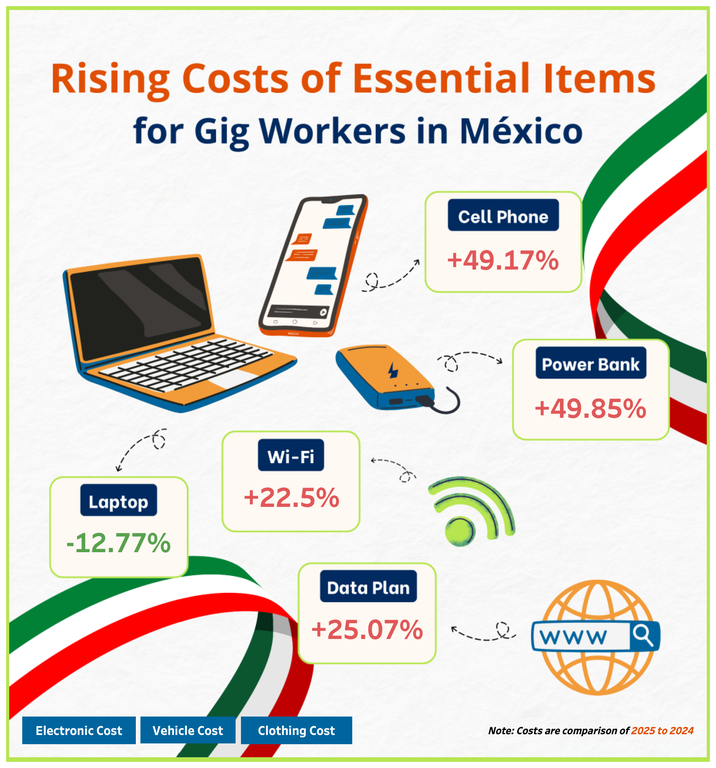
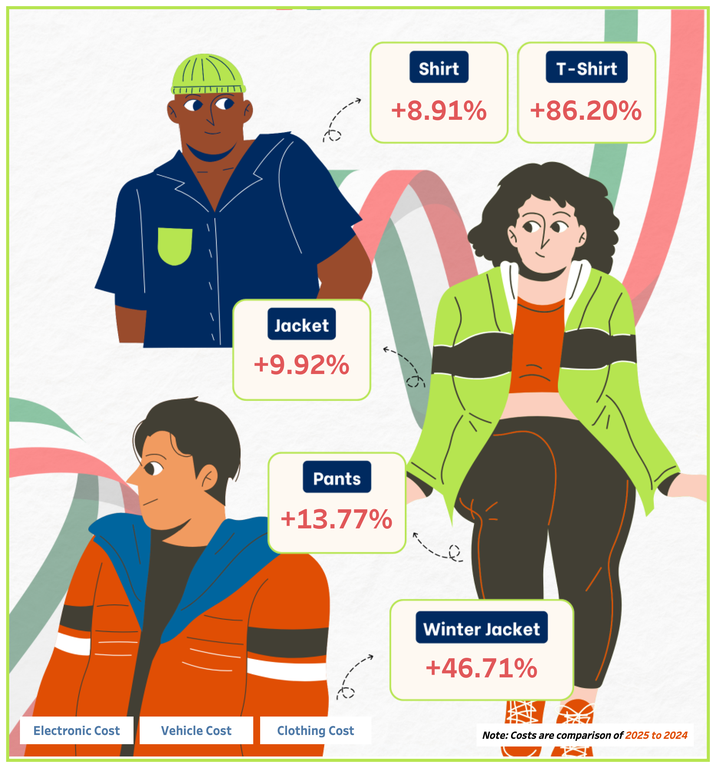
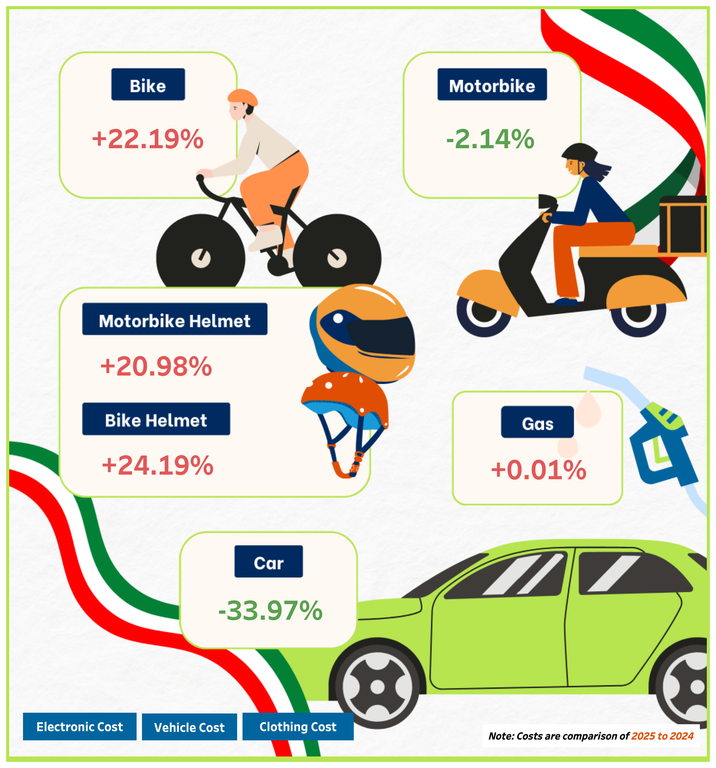
According to data from WageIndicator, app-based workers' expenses in Mexico increased between 2024 and 2025:
- Clothing: rose in almost all categories.
- Transport: vehicles such as motorbikes and cars showed a small decrease, but not enough to offset other increases.
- Connectivity: Internet and mobile data plans increased significantly.
On top of this, there is annual inflation. In October, Mexico recorded an inflation rate of 3.57%, down from 3.76% in September.
Which issues is the reform not addressing?
While the reform is an important step forward, it also presents challenges.
- Workers' income and labour costs will be key factors in determining who is included in the reform. Where workers live will make a significant difference.
- Workers are continuing to cover increasingly high costs in order to work.
- Some platforms have increased their prices for users, resulting in fewer orders and trips. This has a direct impact on drivers' income.
Want to learn more?
Access the full text of the reform
Did you enjoy this article? Read on to find out what pay problems gig workers are up against: